The 7-Step Claims Process
Every roof damage claim follows the same basic sequence. Knowing what comes next removes the uncertainty and gives you more control over the outcome. Here is the full process from damage discovery through collecting your final payment.
Document the damage immediately
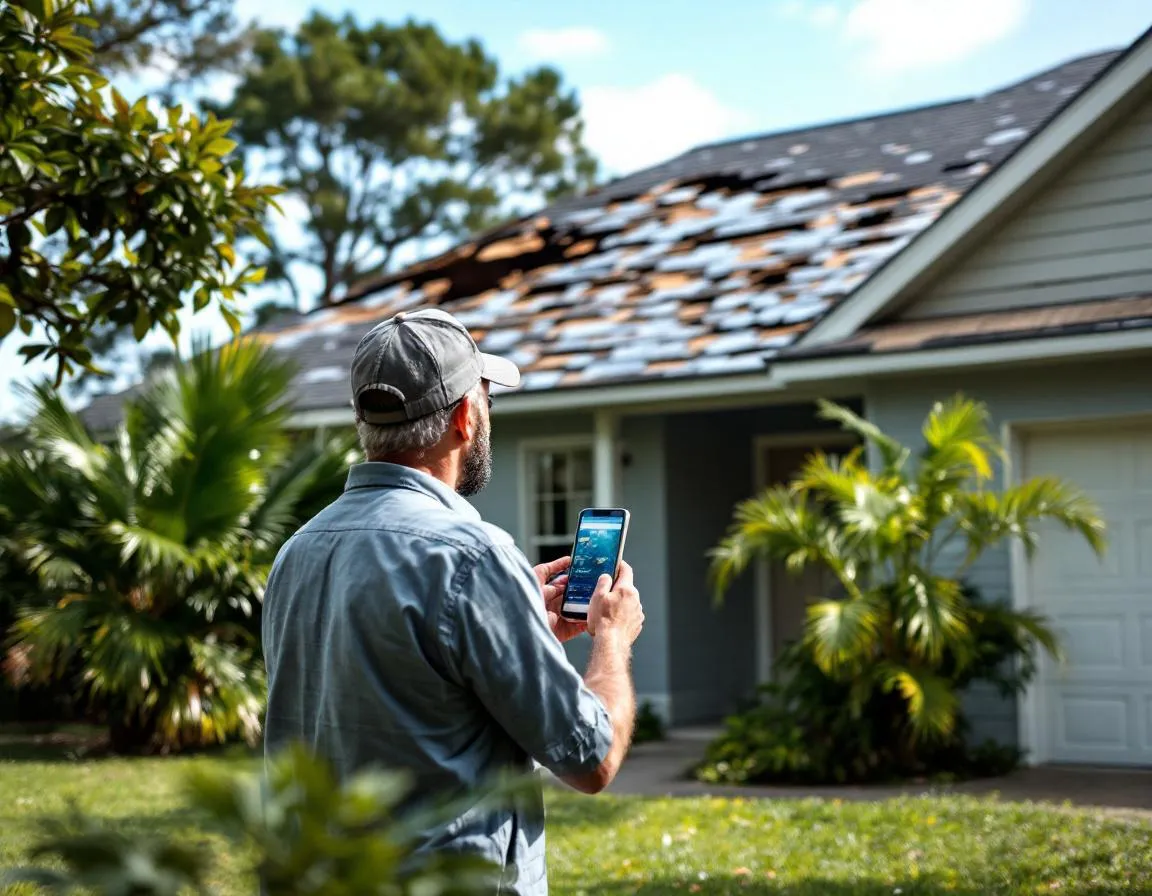
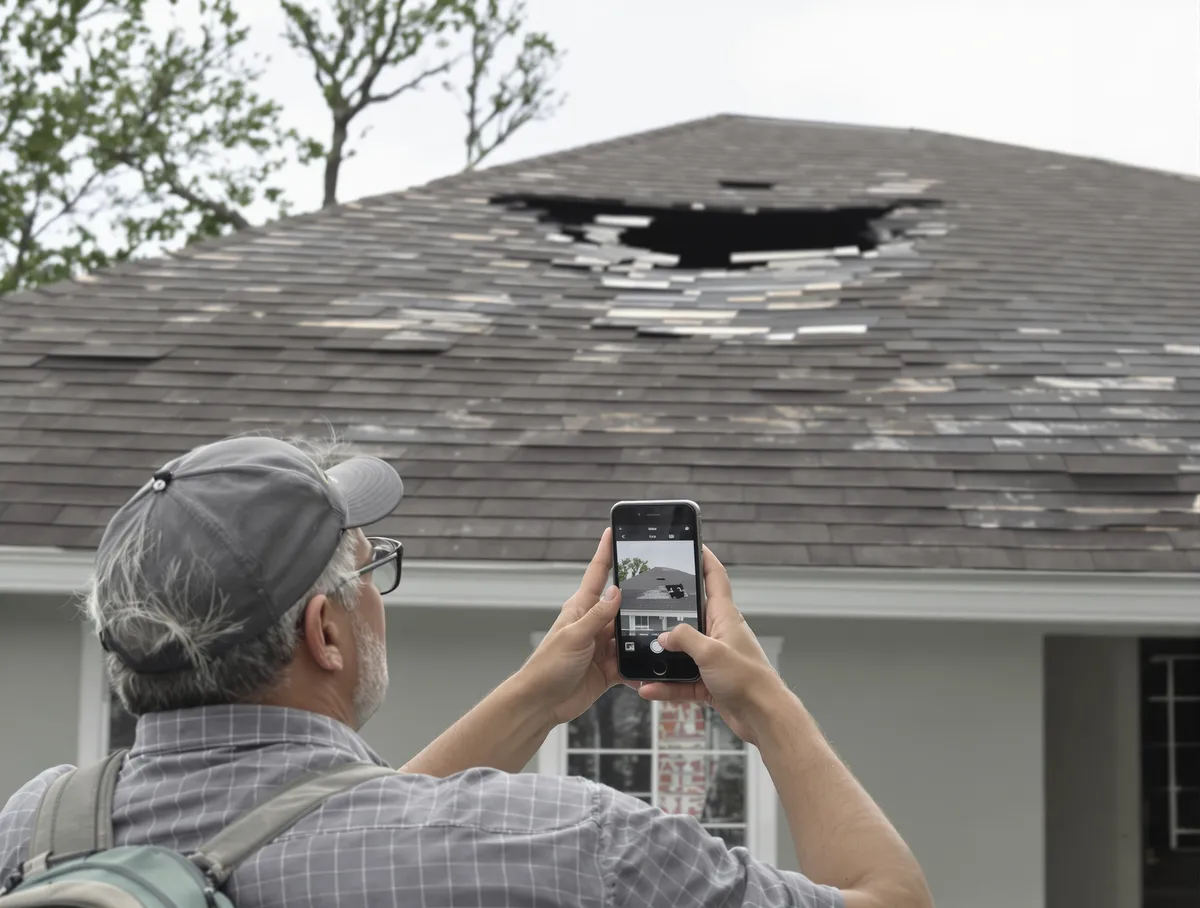
Before you touch anything, photograph and record every piece of visible damage. Take wide shots of all four sides of your home and close-ups of each damaged area. Include interior damage — water stains, drips, warped drywall. Date-stamped photos taken shortly after the event are your strongest evidence.
Don't climb on your roof. Ground-level photos and interior documentation are sufficient for filing. Your carrier's adjuster and your contractor will handle the roof-level inspection.
Prevent further damage (temporary repairs)
Your policy requires you to mitigate — meaning you must take reasonable steps to prevent additional damage. Tarp exposed areas. Catch water intrusion with buckets. Move furniture away from leaks. Board up broken windows if applicable.
Keep every receipt for emergency materials. Tarps, plywood, buckets — these temporary repair costs are typically reimbursable under your policy. Do not make permanent repairs before the adjuster inspects.
Report the claim to your carrier
Call your insurance carrier's claims line or file through their app or website. Have your policy number ready, along with the date of the event and a brief description of the damage. You do not need a contractor's assessment before filing — report promptly and let the process begin.
Write down your claim number, the name of the representative you spoke with, and the date and time of the call. Ask about your deductible amount and whether a hurricane or named-storm deductible applies. Request a timeline for the adjuster visit.
Checkpoint — you should have:
- Damage documented with dated photos and written notes
- Emergency repairs completed and receipts saved
- Claim filed with carrier — claim number recorded
Prepare for the adjuster visit
The adjuster works for your insurance carrier, not for you. Their job is to inspect the damage, determine the cause, and write an estimate. You have the right to be present during the inspection. If you have a roofing contractor who can attend, their expertise in identifying damage the adjuster might miss can be valuable.
Before the adjuster arrives, organize your documentation: photos, written notes, receipts for emergency repairs, and any NOAA weather data or news coverage that supports a storm event in your area. Make a list of every area of damage you've identified.
Review the scope of loss
After the inspection, the adjuster writes a "scope of loss" — a detailed estimate of the damage and what the carrier will pay to repair it. Review this document line by line. Compare it against what your contractor estimates the repairs will actually cost.
If the scope misses damage or underestimates repair costs, you can request a re-inspection or have your contractor submit a supplement with additional documentation. Supplements are a normal part of the process — they are not adversarial.
Checkpoint — you should have:
- Adjuster inspection completed
- Scope of loss reviewed against contractor estimate
- Supplement filed if scope was incomplete
Understand your settlement
Your settlement is the amount your carrier agrees to pay. If you have replacement cost value (RCV) coverage, the carrier typically issues an initial payment that withholds the depreciation. You receive the full amount only after completing repairs and submitting documentation. If you have actual cash value (ACV) coverage, the depreciation is permanent — the initial check is your final number.
Your deductible is subtracted from every settlement. For hurricane claims on the Gulf Coast, this is often a percentage of your dwelling coverage, not a flat dollar amount. Make sure you understand which deductible applies.
Complete repairs and collect recoverable depreciation
Once you complete the repairs, submit your final invoice and proof of completion to your carrier. If you have RCV coverage, the carrier then releases the depreciation holdback — the portion they withheld from your initial payment. This is called "recoverable depreciation."
There is typically a time limit for collecting recoverable depreciation. Most policies require you to complete repairs within 180 days to one year of the settlement. Check your policy for this deadline. If you miss it, you forfeit the holdback permanently.
How an RCV Claim Settlement Works
Roof replacement cost: $22,000
Your standard deductible: -$2,500
Total owed by carrier: $19,500
Depreciation holdback (withheld initially): -$4,800
Initial check from carrier: $14,700
After repairs completed: +$4,800 recoverable depreciation
Amounts are illustrative. Your settlement depends on your policy, deductible, and the adjuster's assessment.
Same Damage Under ACV Coverage
Roof replacement cost: $22,000
Depreciation (16-year-old roof, 50%): -$11,000
Actual cash value: $11,000
Your standard deductible: -$2,500
Insurance pays: $8,500
ACV depreciation is permanent — there is no recoverable depreciation. Amounts are illustrative.
State Differences in Claims Timelines
Insurance regulation happens at the state level, which means Gulf Coast homeowners in Florida, Alabama, and Mississippi face different rules for the same type of claim. Filing deadlines, adjuster response requirements, and deductible triggers all vary.
| Factor | Florida | Alabama | Mississippi |
|---|---|---|---|
| Filing deadline | File promptly — delays can jeopardize coverage | File promptly — varies by policy | 3-year statute of limitations (file sooner) |
| Adjuster response | Carrier must acknowledge within 14 days | Varies by carrier | Varies by carrier |
| Hurricane deductible trigger | Hurricane watch through 72 hours post-storm | Named-storm declaration (may include tropical storms) | Varies — check policy language |
| Deductible type | Percentage-based (2%-5% of dwelling) | Percentage-based (1%-5% of dwelling) | Percentage or flat dollar — varies |
| AOB restrictions | Significant restrictions enacted | Limited restrictions | Limited restrictions |
Regardless of your state, one rule applies everywhere: filing sooner is always better than filing later. Delays create ambiguity about the cause of damage and can give your carrier grounds to question or reduce your claim.
Common Mistakes That Hurt Your Claim
"I should wait for a contractor to look at it before calling my insurance company."
You don't need a contractor's assessment to file a claim. Your carrier wants to hear from you promptly. Report the damage, document what you can see, and prevent further damage. A contractor's detailed assessment can support a supplement later, but it's not a prerequisite for filing.
Waiting days or weeks to file gives your carrier room to question whether the damage was really from the claimed event — or whether it worsened due to your delay.
"The adjuster will find all the damage. I don't need my own documentation."
Adjusters are human. They work on tight schedules and may not climb every slope of your roof or check every interior room. Your own photos, written notes, and organized documentation fill gaps the adjuster might miss. If damage is overlooked, your documentation supports a supplement.
Homeowners who rely entirely on the adjuster's inspection sometimes receive a scope that underestimates their damage — and have no evidence to support a supplement.
"If I sign an Assignment of Benefits, the contractor handles everything and I don't have to worry."
An AOB transfers your claim rights to a third party. You lose control over the negotiation with your carrier, the scope of work, and often the choice of materials. While some contractors operate responsibly under AOBs, the arrangement has been widely abused — which is why several states have restricted or limited them.
Homeowners who sign AOBs sometimes end up with disputes between their contractor and carrier, inferior repair work, or no ability to choose a different contractor if problems arise.
"Making permanent repairs before the adjuster visits speeds things up."
If you make permanent repairs before the adjuster inspects, you eliminate the evidence. The adjuster needs to see the damage to assess its cause and scope. Temporary repairs to prevent further damage are expected and reimbursable. Permanent repairs before inspection can result in a reduced or denied claim.
The carrier may argue they cannot verify the damage or its cause, reducing your settlement to whatever they can piece together from photos alone.
Other Mistakes to Avoid
- Not reading your declarations page before filing. Know your deductible amount and whether you have RCV or ACV coverage.
- Throwing away damaged materials before the adjuster sees them. Keep damaged shingles, broken flashing, and any debris the adjuster may want to examine.
- Accepting the first settlement without reviewing the scope line by line. Compare it against your contractor's estimate.
- Missing the deadline for recoverable depreciation. If you have RCV coverage, complete your repairs within the policy's timeframe or forfeit the holdback.
Check Your Understanding
You discover roof damage on Monday. A contractor can't come until Thursday. Should you wait for the contractor before calling your insurance company?
No. Call your insurance company on Monday. You should report damage promptly — you don't need a contractor's assessment before filing a claim. Document what you can see, prevent further damage, and file. The contractor's detailed assessment can support a supplement later if needed.
Frequently Asked Questions
How long do I have to file a roof damage insurance claim?
Filing deadlines vary by state and policy. Most policies require "prompt" notice — meaning as soon as reasonably possible after discovering damage. In Mississippi, the statute of limitations is generally three years. Florida and Alabama timelines vary by policy. Regardless of legal deadlines, filing sooner is always better. Delays raise questions about whether the damage was caused by the claimed event.
Do I need a contractor before filing an insurance claim?
No. You do not need a contractor's assessment before filing. Report the damage to your carrier promptly, document what you can see, and prevent further damage. A contractor's detailed assessment can support a supplement later if the adjuster's initial scope is incomplete. Waiting for a contractor creates unnecessary delay.
What happens during an insurance adjuster's roof inspection?
The adjuster inspects your roof, photographs the damage, determines its cause, and writes a detailed estimate called a scope of loss. You have the right to be present. The adjuster represents the carrier, not you. Having a roofing contractor present who can point out damage the adjuster might miss is often beneficial.
What is recoverable depreciation on a roof claim?
If you have replacement cost value coverage, your carrier initially pays the actual cash value of the damage — the replacement cost minus depreciation. Once you complete repairs and submit proof, the carrier releases the withheld amount. This is called . Most policies set a deadline of 180 days to one year to complete repairs and claim it.
Can I disagree with my insurance adjuster's estimate?
Yes, and disagreeing is more common than most homeowners realize. If you believe the scope of loss is incomplete or undervalues the damage, you can request a re-inspection, have your contractor submit a supplement with additional documentation, or invoke your policy's appraisal process. Supplements are a routine part of claims — they are not adversarial.
Should I sign an Assignment of Benefits for my roof claim?
An Assignment of Benefits transfers your claim rights to a third party, usually a contractor. This limits your control over the claim process. In most situations, retaining control of your own claim gives you more options and better outcomes. Several Gulf Coast states have enacted legislation restricting AOBs due to widespread abuse.
Insurance Education Disclaimer
This page provides educational information about the roof insurance claims process, not insurance advice. We do not sell insurance, adjust claims, or provide legal counsel. Your specific coverage, deductibles, timelines, and options depend on your individual policy and your state's regulations. Always verify information with your insurance agent or carrier before making decisions about your coverage or filing a claim.
Need a professional damage assessment to support your claim?
Southern Roofing Systems provides documented inspections with photos, measurements, and repair estimates that support your insurance claim process.
Talk to Southern Roofing Systems